

Honey Hunting Expedition in Nepal
MountBee Team
Author
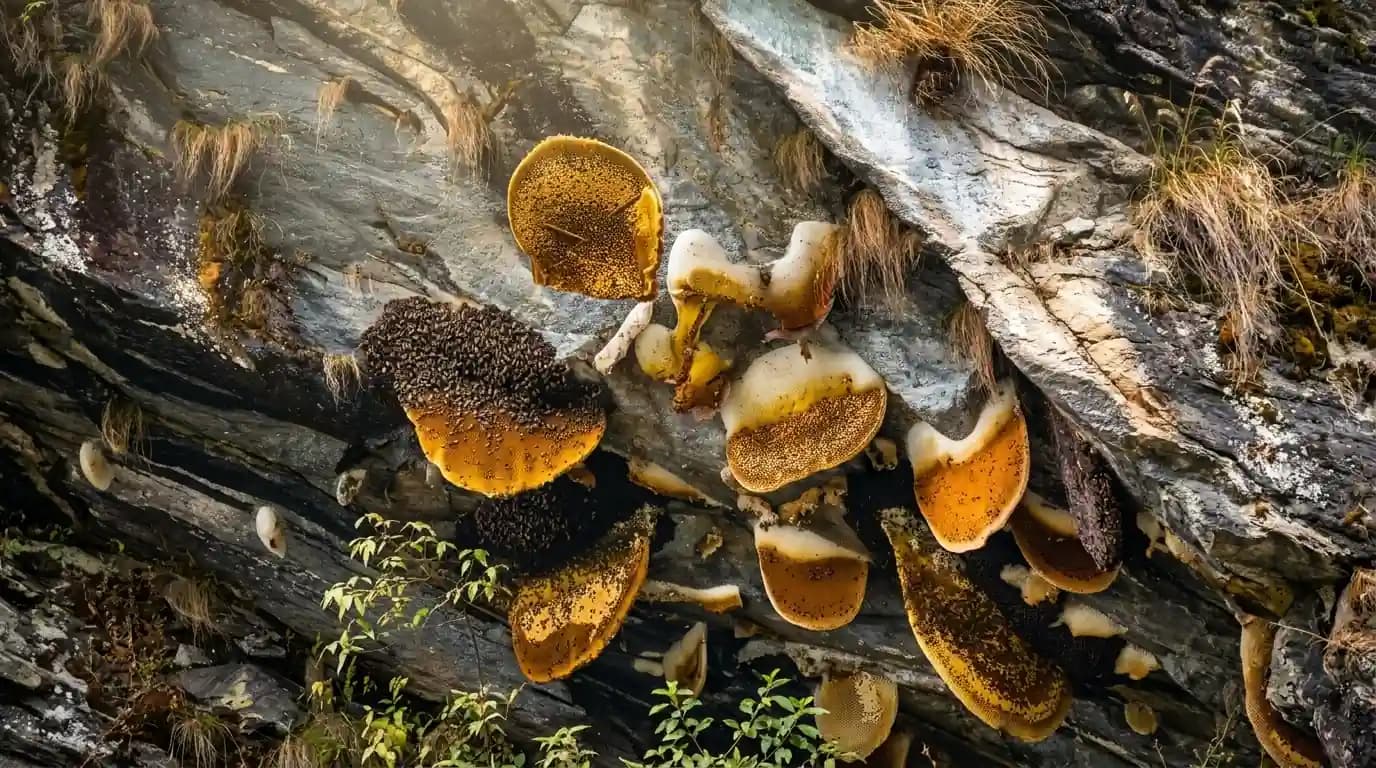
High in the foothills of the Nepalese Himalayas, suspended on hand-woven hemp rope ladders hundreds of feet above the rocky ground, the Gurung honey hunters practice one of the oldest and most dangerous traditions on Earth: harvesting wild cliff honey.
The Himalayan Giant Bee (Apis laboriosa)
The targets of these expeditions are the nests of the Apis laboriosa, the largest honey bee in the world. These bees build massive semi-circular nests under the overhanging cliffs of the Himalayas. Due to the high altitude and the flowers they feed on—specifically the wild rhododendrons—the honey harvested here possesses unique medicinal and sometimes psychoactive properties, often referred to as "mad honey."
Daring the Heights with Ancient Gear
Without any modern climbing ropes, harnesses, or safety nets, the hunters rely entirely on age-old wisdom. They use smoke to disorient the bees, climbing up the sheer cliff faces on ladders made of bamboo and hemp. Guided by the wind and prayers to the cliff spirits, a single hunter handles a long bamboo pole to slice the honeycomb and lower it to the ground in a woven basket.
A Rite of Respect and Balance
For the Gurung community, honey hunting is not just a commercial harvest; it is a sacred ritual. Expeditions only happen during auspicious dates determined by the elders. Offerings are made to the forest gods to seek permission and protection. The hunters ensure they never harvest the entire hive, leaving enough for the bees to rebuild and preserve the ecological balance for the next generation.
"Suspended between earth and sky, the honey hunters of Nepal risk everything to gather the wild, raw gold of the mountains."
The Himalayan honey hunting expedition is a testament to the raw courage, deep spiritual respect, and enduring bond between humans and the wild bees of the mountains.